

Detecting Methane Is Not the Same as Measuring It.
Measuring Methane Emissions — Not Just Methane Presence.
Methane concentration only tells you how much methane is present in the air at a specific moment in time. Flux measurements quantify the actual rate of methane being emitted by the animal. GreenFeed measures methane flux directly by capturing and analyzing every breath under calibrated airflow conditions, providing accurate, repeatable, and publishable per-animal emissions data.
"How much methane is in the air right here, right now?"
Measures gas content of a sample of air, in ppm. A property of the air — sensitive to wind, ventilation, sensor position, and animal behavior.
"How much methane is the animal producing per day?"
Measures mass leaving the animal per unit time, in g CH₄/day. A property of the animal — attributable to a single ID on a single day.
02
Why Sniffer Measurements Can Be Misleading.
A concentration reading depends on a dozen variables outside the animal — wind speed, sensor distance, head position, dilution, barn airflow, sampling duration, ambient conditions. The same animal can produce dramatically different concentration readings depending on which of those variables happens to be in play. Without accounting for airflow and time, concentration alone cannot determine the animal's actual methane emissions rate.
The same cow. The same daily emissions. Measured two days apart on the same pasture — one calm morning, one windy afternoon.
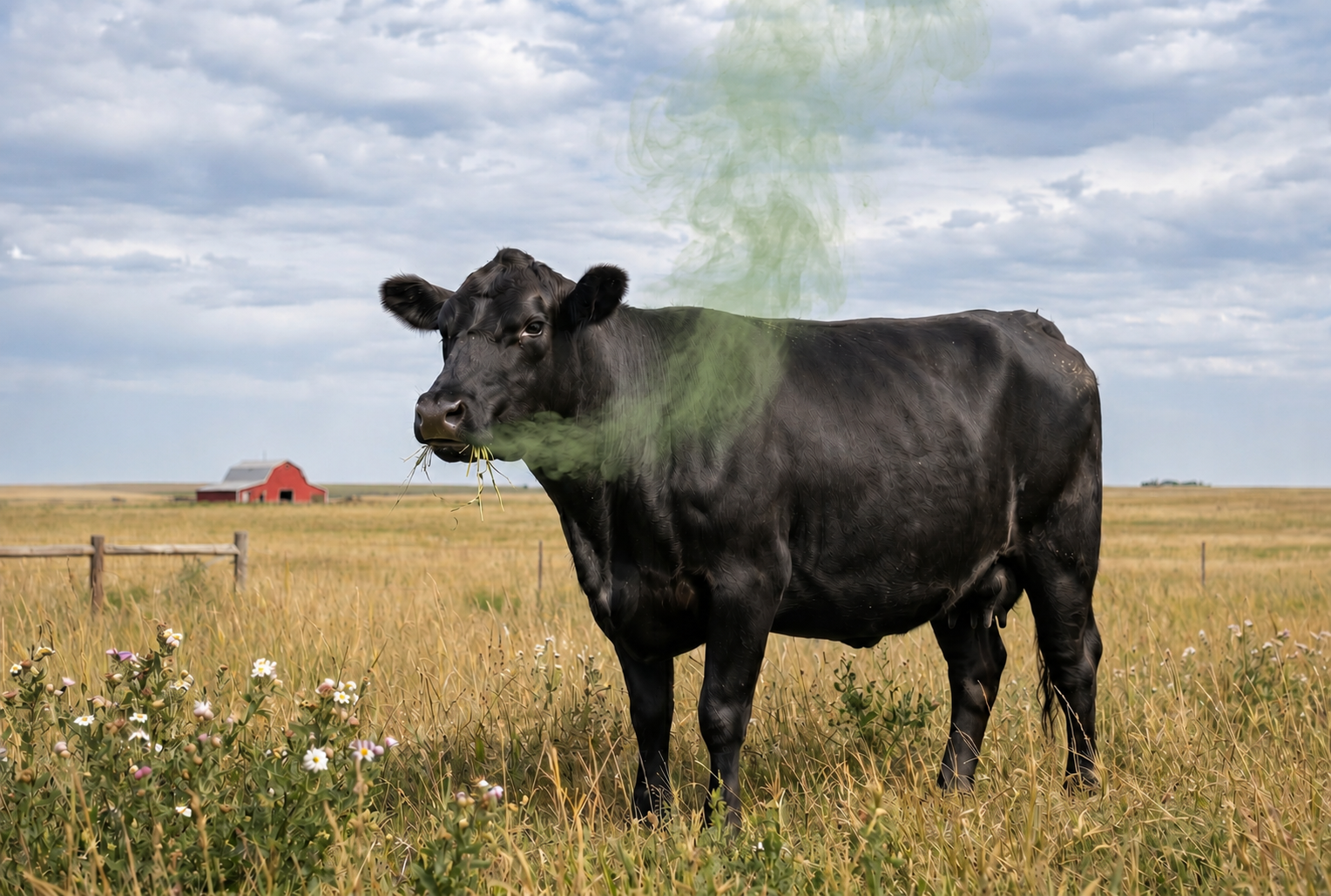
Without wind to disperse it, methane pools around the animal. A passive sniffer reads a large number.
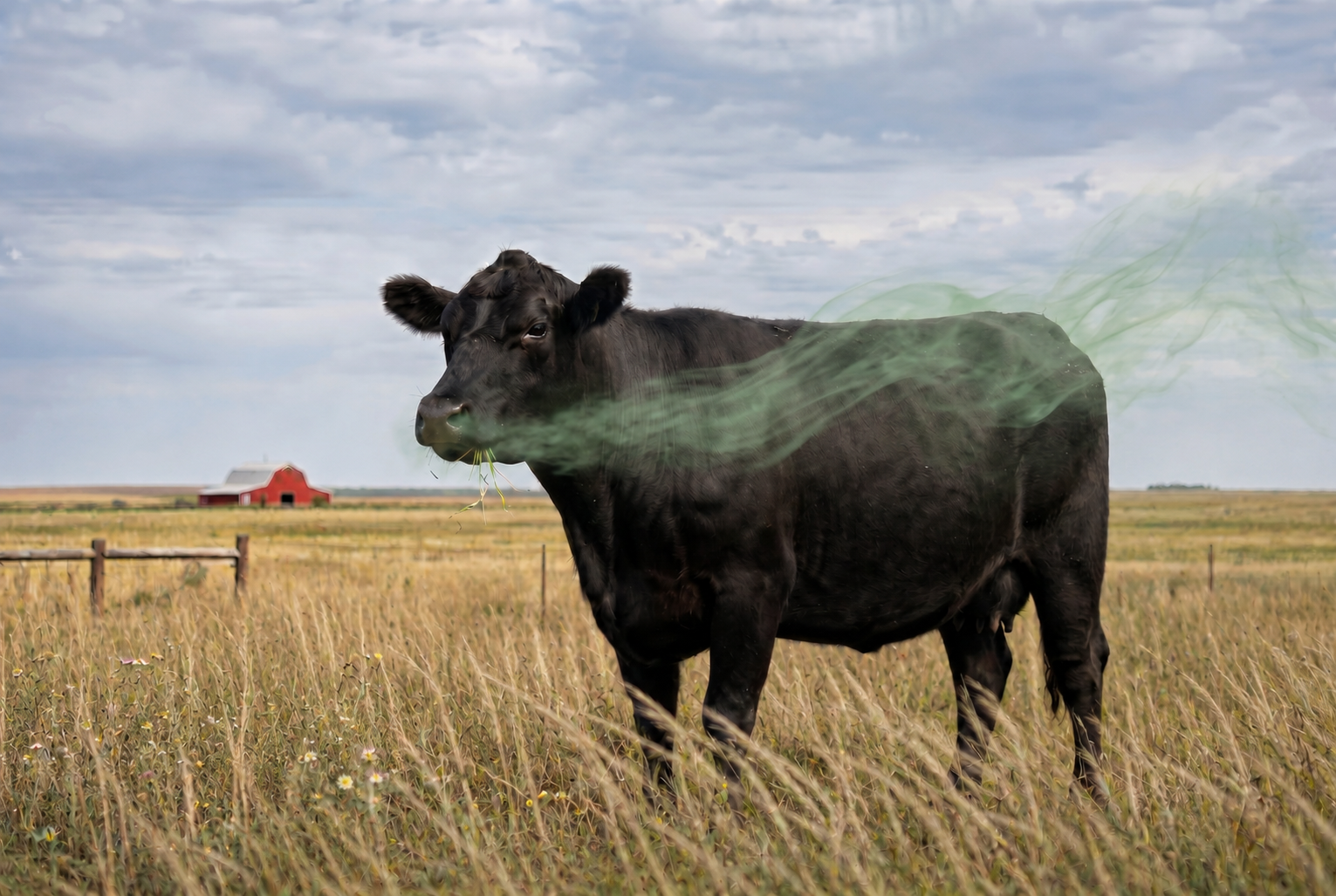
Wind dilutes the plume almost immediately. The same sniffer now reads 11× lower.
The concentration changed by an order of magnitude. The cow's actual emissions never moved. That's the gap GreenFeed closes by measuring airflow at the point of capture — so the number you report reflects the animal, not the weather.
03
Why Flux Measurements Set The Standard.
GreenFeed solves the variability problem at its source by measuring the actual airflow, background gases, and environmental conditions that sniffers ignore. The result is per-animal emissions data that's comparable across herds, regions, and time periods.
Globally Standardized & Calibrated
Every GreenFeed unit is manufactured and calibrated to a standard. Data from a dairy in Europe is directly comparable to a feedlot in North America. The same measurement, the same way, every time.
Repeatability Across Trials
Identical hardware and calibration means identical methodology. The same study will yield the same results if done over.
Natural Measurement Conditions
Animals are measured during normal feeding behavior on pasture, in feedlots, or in dairy barns. No chambers, no restraint, no behavioral distortion of the data.
Head Proximity Sensor
Captures every visit only when the animal's head is properly positioned in the hood, ensuring full breath capture. Invalid positions are flagged and excluded automatically.
40 L/sec Calibrated Capture
A calibrated fan actively pulls 40 liters of air per second through the system, capturing all ambient air around the animal's head.
Cancels Out the Variability
Wind speed, background gases, environmental conditions, head position — the same variables that ruin sniffer readings are measured, accounted for, and corrected for on every single visit.
03
How a Flux Measurement Is Gathered.
Flux measurements combine methane concentration with airflow and time to quantify the actual methane emitted by the animal.
01
Capture Breath
Every exhalation captured under controlled conditions.
02
Measure Concentration
CH₄ and CO₂ captured in animals controlled environment.
03
Measure Airflow
Calibrated capture rate of 40 L/sec.
04
Measure Over Time
Integrated across each visit, every animal.
05
Calculate Rate
Concentration × flow rate × time = mass.
Better Measurements Lead to Better Data & Outcomes.
The cleaner and more complete the methane data, the better the outcomes for producers chasing profitability, for researchers chasing answers, and for corporations chasing defensible sustainability claims. Direct measurement is what makes all three possible.
For Producers
Methane intensity and CO₂ as a proxy for feed efficiency.
Cleaner emissions data gives producers a direct line into feed efficiency. Per-animal methane intensity and CO₂ output reveal which animals convert feed most effectively, which rations perform best, and where margin is being left on the table — turning emissions data into a profitability tool.
For Researchers
More complete data leads to more concrete conclusions.
When every data point comes from the same standardized method, study results become comparable, reproducible, and defensible. Cleaner inputs mean stronger statistical power, fewer confounding variables, and the kind of evidence base that advances the science instead of just adding to it.
For Corporations
Measured emissions — not modeled estimates.
Sustainability reporting depends on numbers that hold up under scrutiny. Direct flux measurements give corporations actual measured emissions to report on — not modeled approximations — the kind of evidence that satisfies auditors, regulators, and downstream buyers.
Measure Emissions — Not Just Methane Presence.
GreenFeed directly measures methane flux to produce scientifically defensible per-animal emissions data trusted by researchers around the world.
The Papers That Back It Up.
GreenFeed methodology is cited in 800+ peer-reviewed publications. These four are some of the most-referenced for the topics covered here.